

What is Blockchain in Supply Chain and Why Businesses Are Adopting It in 2026
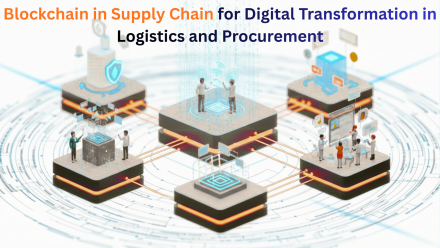 A shipment leaves a warehouse in Texas and reaches a retailer in New York, but no one can confidently say where delays happened, who handled the goods, or whether the data was ever altered. That lack of visibility costs companies billions every year. Now imagine a system where every step is recorded, verified, and impossible to tamper with. That is exactly why blockchain in supplychain is gaining serious traction across industries in the US.
What is Blockchain in SCM and how does it actually work
Blockchain in SCM is a distributed digital ledger that records transactions across multiple participants in a supply chain. Instead of relying on one central authority, data is shared across a network where every participant has access to the same version of truth. Each transaction is grouped into a block and linked to the previous one, creating a chain that cannot be without consensus. What this really means is improved trust, transparency, and accountability between suppliers, manufacturers, logistics providers, and retailers.
Why traditional supply chains struggle with transparency
Most supply chains still operate on fragmented systems. Data sits in silos across different organizations, often stored in spreadsheets, emails, or outdated ERP systems. This leads to delays, miscommunication, and limited traceability. When something goes wrong, whether it is a product recall or shipment delay, identifying the root cause becomes slow and expensive. Blockchain in supplychain removes these gaps by creating a shared and tamper resistant record that everyone can rely on.

Key benefits of blockchain in supplychain solution
Companies adopting a blockchain in supplychain solution are not doing it for hype. They are solving real operational challenges. One major benefit is end to end visibility. Every product movement can be tracked in real time, from raw material sourcing to final delivery. Another advantage is fraud reduction. Since records cannot be altered easily, it becomes much harder to manipulate data or introduce counterfeit goods. Cost efficiency is another big factor. By removing intermediaries and reducing manual verification processes, businesses can streamline operations and lower overhead. There is also improved compliance. With transparent records, companies can meet regulatory requirements more easily, especially in industries like food, pharmaceuticals, and manufacturing.
Real world use cases in the US market
Several US based companies are already leveraging blockchain in SCM to improve their supply chain performance. In the food industry, blockchain is used to track the origin of products, helping companies quickly identify contamination sources and reduce recall times. In retail, brands are using blockchain to verify product authenticity and combat counterfeiting. Logistics companies are adopting blockchain in supplychain to streamline documentation, reduce paperwork, and improve coordination between multiple stakeholders. Even the healthcare sector is exploring blockchain to ensure the safe and transparent movement of medical supplies.

How blockchain improves trust across partners
Supply chains involve multiple independent parties that often do not fully trust each other. This leads to repeated verification steps, delays, and increased costs. Blockchain in supplychain changes this dynamic participant by providing a single source of truth. Every can access verified data without relying on intermediaries. Smart contracts, which are self executing agreements stored on the blockchain, further enhance trust by automating processes like payments, order fulfillment, and compliance checks. What this really means is faster transactions and fewer disputes.
Challenges businesses should consider before adoption
Despite its advantages, implementing a blockchain in supplychain solution is not without challenges. Integration with existing systems can be complex, especially for organizations with legacy infrastructure. There is also the need for standardization across participants, since the value of blockchain increases when more stakeholders are involved. Scalability is another concern, as large scale supply chains generate massive amounts of data. Companies also need to consider regulatory and data privacy requirements, particularly in the US where compliance standards can vary by industry.

Future of blockchain in SCM with emerging technologies
The future of blockchain in SCM is closely tied to other technologies like AI, IoT, and automation. IoT devices can capture real time data from shipments, such as temperature, location, and handling conditions, which can then be recorded on the blockchain. AI can analyze this data to predict disruptions and optimize routes. Together, these technologies create a more intelligent and responsive supply chain. Businesses that adopt this integrated approach are likely to gain a competitive edge in efficiency, reliability, and customer satisfaction.
Final Notes
Blockchain in supplychain is no longer a theoretical concept. It is a practical solution addressing some of the most persistent challenges in modern logistics. From improving transparency and reducing fraud to enhancing efficiency and trust, the impact is already visible across multiple industries in the US. Companies that take a strategic approach to adoption, focusing on real use cases and integration, will be better positioned to lead in a more connected and data supply driven chain ecosystem.

